
Description
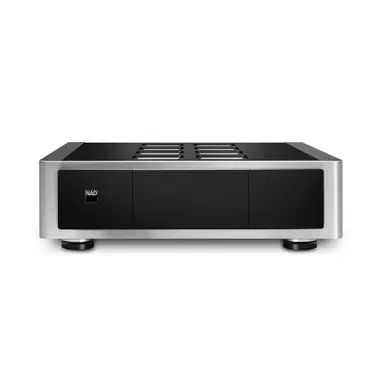
Tame Any Speaker Load and Get Reference-Level Linearity with the NAS M23 V2 Hybrid Digital Stereo Power Amplifier: Features 200Wpc of Continuous Output, Vanishingly Low Distortion, and Balanced XLR Inputs
Get reference-grade linearity and wide, flat responsiveness with your speakers no matter the load, and enjoy profound dynamic range and detailed playback with the NAD M23 V2 Masters hybrid digital stereo power amplifier. Featuring second-generation Purify Eigentakt Class D amplifier modules and multi-layer circuit boards, M23 V2 continuously outputs a super-clean 200Wpc into eight ohms (380Wpc into four ohms). If that’s not enough juice, putting it in bridged mode gives you a whopping 700W mono (into eight ohms). Operating with nearly immeasurable noise, harmonic distortion, or intermodulation distortion, it epitomizes sonic transparency, rock-solid stability, and energy efficiency.
With M23 V2, the heat, weight, and inefficiency of traditional analog power stages are things of the past. Claiming an extremely low output impedance, M23 V2 offers iron-grip control of any loudspeaker load and consistent, smooth bass performance at practically any volume. Pinpoint imaging, broad soundstages, and effortless resolution of complicated passages count as practical hallmarks of this tremendous design.
Equipped with single-ended RCA and balanced XLR auto-sensing inputs, a three-position adjustable gain control, plus an intelligent 12V trigger input and output, M23 V2 seamlessly fits into any high-end separates system. Rigid panels and magnetic iso-point feet further add to the appeal of a unit that makes for a perfect match with the NAD M33 V2 or M66.
For more information on M23 V2 or any NAD Masters Series component, just reach out at 312-433-0200.
“[The] NAD Masters Series M23 Stereo power amplifier is a fine-sounding component. Do NAD’s own input stages and power supply contribute to the smooth, involving sound? They certainly don’t hurt.M23 also is a substantial piece of equipment, with full-sized casework and useful features like easy bridged operation and balanced as well as single-ended input connections.”—Future Audiophile