
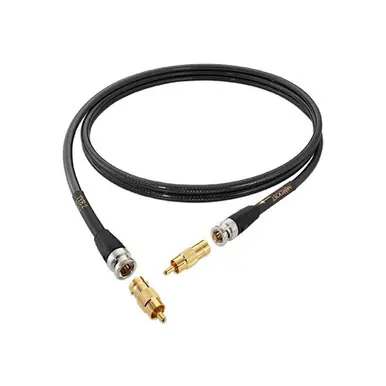
Description
Nordost Tyr 2 Digital Cable
Heroic Performance, Patented Technology, Extreme Bandwidth, Stunning Precision, 75-Ohm and 110-Ohm Versions: Nordost Tyr 2 Digital Cable Delivers Pristine Detail and Zero-Loss Data Transfer
True to the heroic glory of its mythological namesake, the Nordost Tyr 2 digital cable features an enviable combination of performance, technology, workmanship, and precision that’s simply unmatched in its field. Such excellence does not come cheap, but then again, the reference-setting sonics and emotional impact made possible via Tyr 2 can easily be viewed as priceless. Constructed with silver-plated, solid-core conductors suspended in Nordost’s patented Dual Mono-Filament technology, which creates a virtual air dielectric, Tyr 2 features tight tolerance of characteristic impedance necessary to ensure pristine musical detail – all of which remains virtually unimpeded by timing errors or destructive jitter. Both the 75-ohm RCA/BNC and 110-ohm XLR cables have painstakingly calculated, mechanically tuned lengths that reduce internal microphony and high-frequency impedance resonance. As a result, Tyr 2 touts the extreme bandwidth necessary for zero-loss data transfer. With Tyr 2, your music will sound absolutely incredible, and you will be able to hearthe major improvements wrought by high-resolution audio in ways you never thought possible. 100% Music Direct Guaranteed.
Differences Between RCA/BNC and XLR VersionsThe functions of the RCA/BNC and XLR cables are dictated by their differences in design and build. Tyr 2 RCA/BNC S/PDIF interconnects employ a coaxial design and are terminated with gold-plated Neutrik BNC connectors for correct impedance matching. Each is also supplied with gold-plated RCA adapters. Tyr 2 XLR AES/EBU interconnects use a twinaxial design and are terminated with gold-plated Neutrik XLR connectors, ensuring they maintain constant impedance throughout the cabling as well as across terminations.